



In the rhythm of modern life, brocade embroidery and weaving face the risk of fading away. To preserve traditional cultural values, Mường Thanh ward organized training on conserving brocade embroidery and weaving, contributing to safeguarding cultural identity and creating additional livelihoods for residents.
Mường Thanh ward represents a long-standing settlement of the Thái community, preserving numerous distinct traditional cultural values. Among these, weaving fabric and embroidery have long been tasks attached to Thái women, creating products serving daily life and traditional rituals. However, in modern life, embroidery and weaving alongside many traditional cultural values face the risk of being forgotten. Trần Văn Sinh, Vice Chairman of the Mường Thanh ward People’s Committee, expressed concern that traditional handicraft embroidery and weaving among local Thái people face the risk of fading, making the restoration, preservation, and promotion of traditional craft values a necessary and meaningful task.
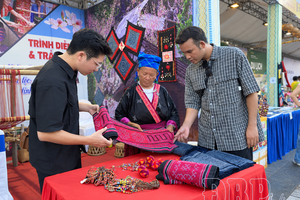
From that practical reality, Mường Thanh ward organized training to restore and conserve traditional Thái brocade embroidery and weaving with 15 trainees from Ten village. Over 12 days, trainees were directly guided by two artisans through weaving, embroidery, and completing traditional products such as Piêu scarves, hand towels, crossbody bags, and handbags, while also receiving guidance on designing highly applicable product patterns suited for souvenirs.
.jpg)
During the class days, the Cultural House of Ten village buzzed with conversation beside looms. After years away from the craft, hands that felt somewhat clumsy gradually regained dexterity through every needle stroke and thread line. Upon completing the course, each trainee finished 3 to 5 products featuring characteristic patterns of the Thái ethnic community, with the class serving as an occasion to rediscover memories for many.
Quàng Thị Hoa shared that in her youth, embroidery and weaving were daily familiar tasks, but nowadays, ready-made goods are abundant so her family no longer weaves fabric or embroiders scarves and skirts like before. Having not embroidered for over 30 years with the family loom broken, she registered as soon as she learned the ward opened a class to relearn the craft and help preserve her ethnic group’s cultural beauty.
Sharing that sentiment, Lò Thị Hiên noted that upon returning to class in the initial days, she had forgotten many techniques, needing to relearn every embroidery stitch from scratch. Nevertheless, she persevered in learning the craft with the desire to preserve ethnic cultural identity and generate additional livelihoods from the traditional craft itself. As the owner of an ethnic cuisine restaurant in Ten village, Hiên plans to set up a loom right inside her restaurant space post-course to weave products serving her family, create souvenirs, and introduce the traditional craft to tourists.
Accompanying the class, artisans focused on imparting core techniques of the traditional craft. According to artisan Tống Thị Vượng from Noong Chứn village, Mường Thanh ward, most trainees previously knew embroidery and weaving, so receiving guidance and practicing basic techniques enabled them to rapidly regain their skills. Additionally, she guided trainees to make various products tailored to market demands, such as hand towels, crossbody bags, handbags embroidered with village or ward names, or gingham scarves blended with brocade patterns, to serve tourists’ shopping needs.
According to Trần Văn Sinh, following the training class, Mường Thanh ward will continue promoting and raising public awareness regarding the value of brocade embroidery and weaving, advertising traditional products, and step-by-step linking craft preservation with community tourism development to create jobs and elevate resident income across the area.
On every scarf and brocade garment, each needle line and thread stitch preserves cultural beauty handed down alongside the dexterity of Thái women in Mường Thanh ward. As traditional crafts are handed down and continued, those values will remain present in daily life, contributing to preserving ethnic cultural identity and enhancing appeal for Điện Biên tourism.
Nguyễn Hiền
.jpg)
.jpg)
.jpg)
.jpg)

.jpg)
.jpg)
.jpg)


.jpg)
.jpg)
.jpg)

You have 500/500 characters left
Please enter 5 or more characters!!!